CMB / POLARBEAR
My research on CMB polarization with the POLARBEAR and Simons Array experiments.
-
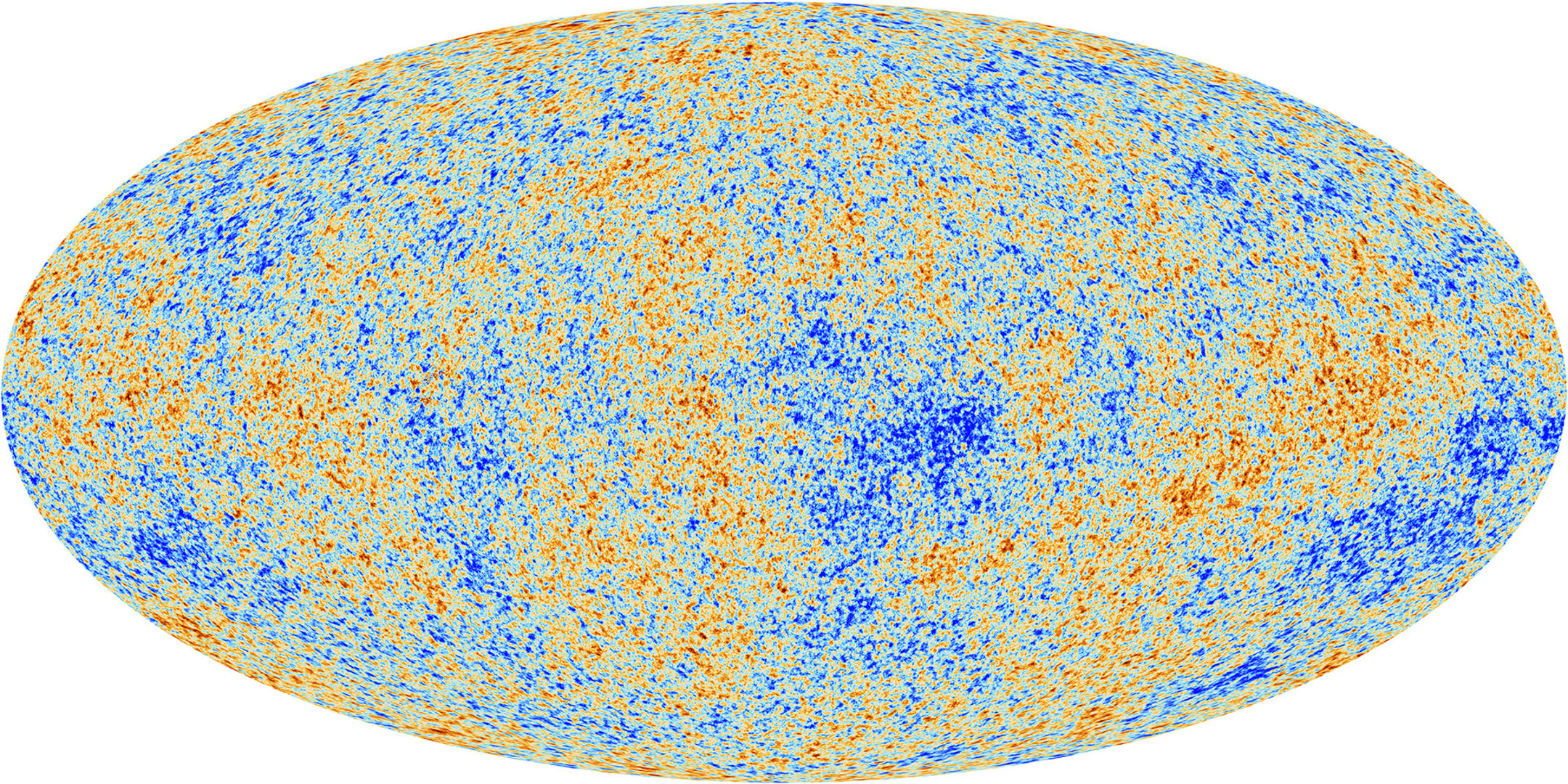
The Cosmic Microwave Background (CMB) map observed by the PLANCK satellite. Credit: PLANCK team What is CMB?
The Cosmic Microwave Background (CMB) is the oldest light that we can observe today. It was created when the Universe was only 380,000 years old and filled the entire Universe. At that time, the Universe had expanded enough to become less opaque and allowed photons to escape from interacting with free particles. More than 13 billion years after that, the Universe has been continually expanding and cooling. The wavelength of these photons has been shifted (also known as “redshifted”) and their temperature has decreased to just 2.7 Kelvin as we observe today.
Because the CMB is the furthest backlight we can study, it is the most important evidence for understanding the origin of the Universe. Furthermore, as they traveled across the Universe, CMB photons were deflected by the gravitational lensing effect from cosmic structures (the large-scale structure). This deflection helps us understand the composition and formation of structure in the Universe.
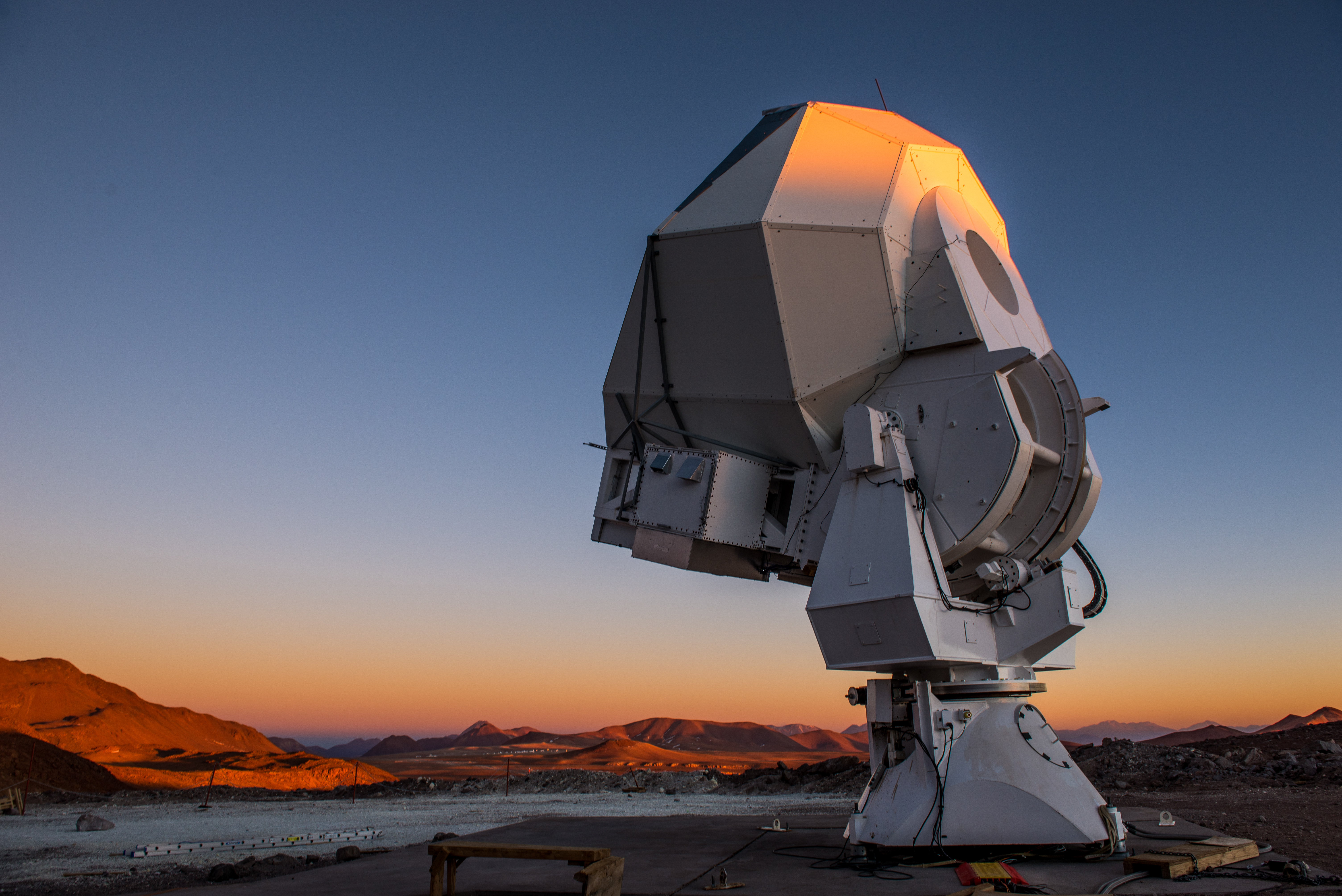
The Huan Tran Telescope holding the POLARBEAR receiver at the James Ax Observatory, Chile What is POLARBEAR?
POLARBEAR is a CMB polarization experiment located in northern Chile. Our primary goal is to detect a faint CMB B-mode signal — evidence of inflationary theories — which predict the early universe underwent a phase of rapid expansion generating primordial gravitational waves. These gravitational waves imprinted their signature, a primordial B-mode polarization, into the CMB.
Additionally, gravity from early times influenced the universe to form large-scale structures observable today. These structures distorted early CMB photons and transformed E-mode to B-mode polarization. POLARBEAR measurements also help us understand the neutrino mass and dark energy.
POLARBEAR was deployed in the Atacama Desert in October 2011 and saw first light in January 2012. Since then the collaboration has published numerous results, including the first detection of CMB B-mode polarization from gravitational lensing in 2014.
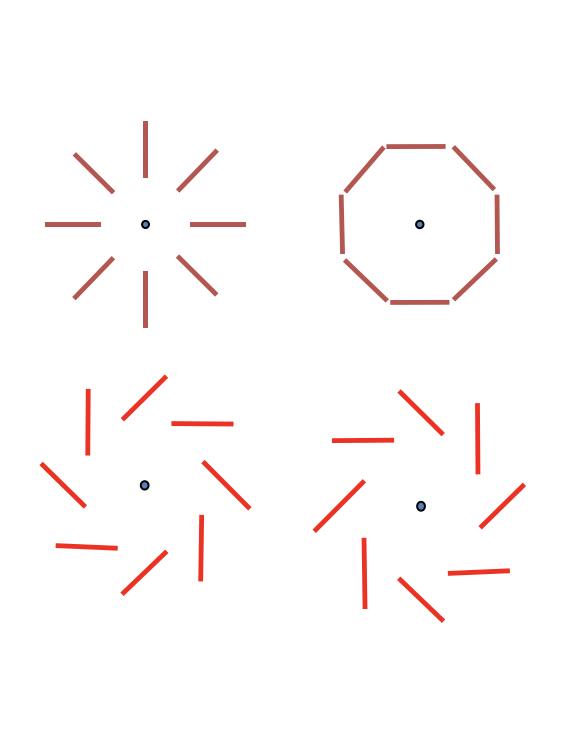
Top: gradient-like E-mode polarization pattern. Bottom: curl-like B-mode polarization pattern. What is the Simons Array?
The Simons Array is the expansion of POLARBEAR. When completed, it will consist of three telescopes, each with more than 7,500 dual-polarization detectors — over 22,000 total, 18 times more than POLARBEAR. Combined with more advanced readout technology, this greatly enhances our capacity to detect the inflationary B-mode signal.
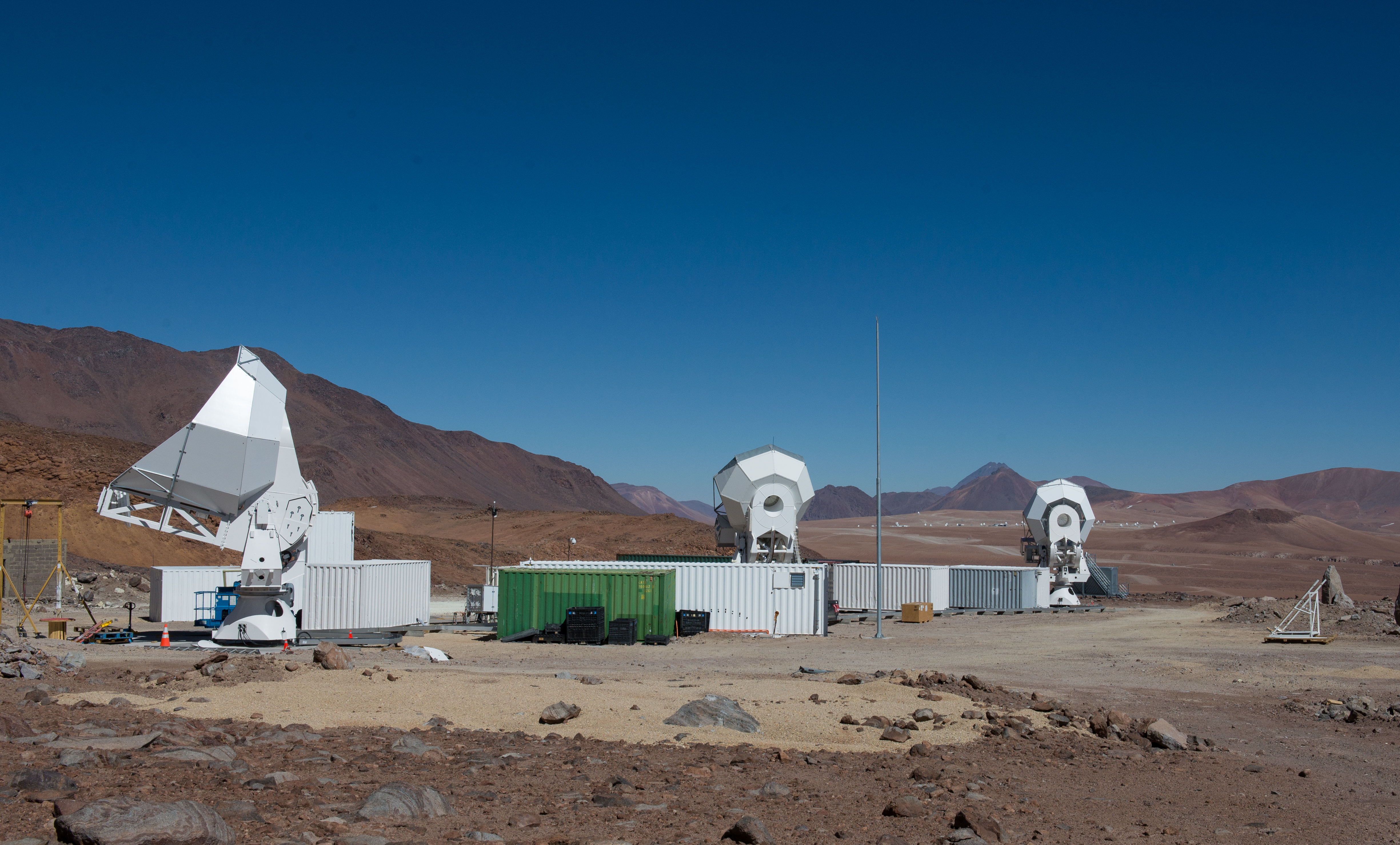
Simons Array with ALMA in the background Why Chile?
Atmospheric water vapor absorbs and attenuates millimeter-wave photons, obstructing CMB observations. At over 5,000 meters above sea level, the Atacama Desert is one of the driest places on Earth — making it ideal for CMB telescopes, including POLARBEAR.
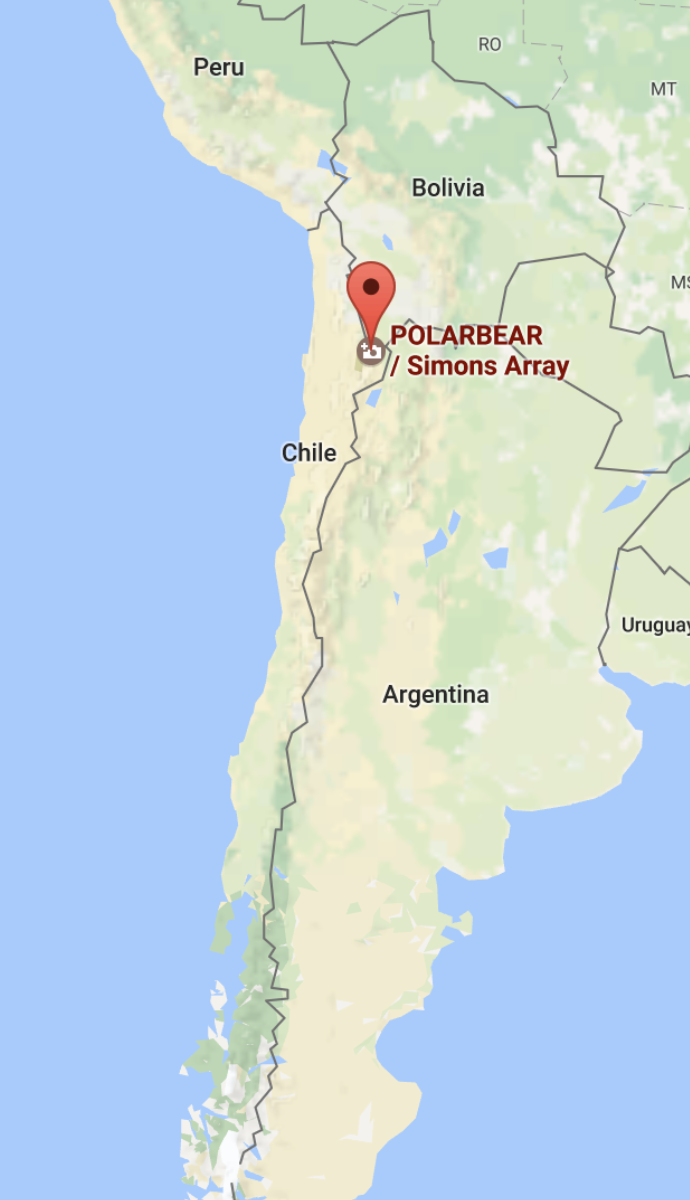
POLARBEAR and Simons Array site location. Credit: Google Maps
Want to know more?
Key publications from the POLARBEAR/Simons Array collaboration:
- Z. Kermish et al. “The POLARBEAR Experiment,” Proc. SPIE 8452, 84521C (2012). doi:10.1117/12.926354
- The POLARBEAR Collaboration. “A Measurement of the CMB B-mode Polarization Power Spectrum at Sub-degree Scales with POLARBEAR,” ApJ, 794, 171 (2014). doi:10.1088/0004-637X/794/2/171
- The POLARBEAR Collaboration. “Measurement of the CMB Polarization Lensing Power Spectrum with POLARBEAR,” PRL, 113, 021301 (2014). doi:10.1103/PhysRevLett.113.021301
- N. Stebor et al. “The Simons Array CMB Polarization Experiment,” Proc. SPIE 9914, 99141H (2016). doi:10.1117/12.2233103
- P. Siritanasak et al. “Broadband AR-Coated Extended Hemispherical Silicon Lenses for POLARBEAR-2,” JLTP, 184, 553 (2016). doi:10.1007/s10909-015-1396-x
- The POLARBEAR Collaboration. “A Measurement of the CMB B-mode Power Spectrum from Two Years of POLARBEAR Data,” ApJ, 848, 121 (2017). doi:10.3847/1538-4357/aa8e9f
- The POLARBEAR Collaboration. “A Measurement of the Degree-Scale CMB B-Mode Angular Power Spectrum with POLARBEAR,” ApJ, 897, 55 (2020). doi:10.3847/1538-4357/ab8f24
For the full list of publications, see the publications page.
"The Universe is under no obligation to make sense to you."
-
แผนที่รังสีไมโครเวฟพื้นหลังของเอกภพ (CMB) จากการสังเกตการณ์ของดาวเทียม PLANCK เครดิต: ทีม PLANCK CMB คืออะไร?
รังสีไมโครเวฟพื้นหลังของเอกภพ หรือ CMB เป็นแสงที่เก่าแก่ที่สุดที่เราสามารถมองเห็นได้ในปัจจุบัน CMB ได้กำเนิดขึ้นเมื่อครั้งจักรวาลมีอายุราว 380,000 ปี ในช่วงเวลานั้น จักรวาลได้ขยายตัวจนมีขนาดใหญ่เพียงพอ จนกระทั่งโฟตอนสามารถเดินทางได้อย่างอิสระ โดยไม่ถูกกักกันโดยอนุภาคอิสระ จากช่วงเวลานั้นจนถึงปัจจุบัน จักรวาลได้ขยายตัวและเย็นตัวลงมากกว่า 13,000 ล้านปี ความยาวคลื่นของ CMB ได้ขยายตัวขึ้นตามการขยายตัวของจักรวาล (redshift) และอุณหภูมิได้ลดลงจนเหลือประมาณ 2.7 K
เนื่องจาก CMB เป็นแสงที่เราสามารถศึกษาได้จากไกลที่สุด มันจึงเป็นหลักฐานสำคัญในการทำความเข้าใจจุดกำเนิดของจักรวาล นอกจากนั้น ระหว่างที่ CMB เดินทางมาถึงโลก มันต้องผ่านกาแล็กซีและโครงสร้างขนาดใหญ่ของเอกภพ (large-scale structure) แรงโน้มถ่วงจากสิ่งเหล่านี้ทำให้คุณสมบัติของ CMB เปลี่ยนไป ซึ่งช่วยให้เราเข้าใจโครงสร้างและองค์ประกอบของจักรวาลได้
กล้องโทรทรรศน์ Huan Tran ที่ติดตั้งตัวรับสัญญาณ POLARBEAR ณ หอดูดาว James Ax ประเทศชิลี ทำความรู้จัก POLARBEAR
POLARBEAR คือการทดลองวัดโพลาไรเซชันของ CMB ซึ่งตั้งอยู่ทางตอนเหนือของประเทศชิลี เป้าหมายหลักของเราคือการตรวจจับสัญญาณ B-mode อันจางมากของ CMB ซึ่งจะเป็นหลักฐานสนับสนุนทฤษฎีอินเฟลชัน ทฤษฎีดังกล่าวทำนายว่าในช่วงแรกเริ่มของจักรวาล จักรวาลได้ผ่านช่วงการขยายตัวอย่างรวดเร็ว ซึ่งก่อให้เกิดคลื่นความโน้มถ่วงปฐมกาล คลื่นเหล่านั้นได้ทิ้งรอยไว้บน CMB ในรูปแบบของโพลาไรเซชัน B-mode ปฐมกาล
นอกจากนี้ แรงโน้มถ่วงในยุคแรกของจักรวาลยังมีอิทธิพลต่อการก่อตัวของโครงสร้างขนาดใหญ่ที่สังเกตได้ในปัจจุบัน โครงสร้างเหล่านี้บิดเบือนโฟตอน CMB และแปลง E-mode ให้กลายเป็น B-mode โพลาไรเซชัน การวัดผลจาก POLARBEAR ยังช่วยให้เราเข้าใจมวลของนิวทริโนและพลังงานมืดได้ดียิ่งขึ้น
POLARBEAR ถูกติดตั้งในทะเลทรายอาตากามาในเดือนตุลาคม 2554 และเริ่มต้นสังเกตการณ์ในเดือนมกราคม 2555 นับตั้งแต่นั้น ความร่วมมือ POLARBEAR ได้ตีพิมพ์ผลงานวิจัยมากมาย รวมถึงการตรวจพบโพลาไรเซชัน B-mode ของ CMB จากเลนส์ความโน้มถ่วงเป็นครั้งแรกในปี 2557
บน: รูปแบบโพลาไรเซชัน E-mode แบบ gradient ล่าง: รูปแบบโพลาไรเซชัน B-mode แบบ curl อะไรคือ Simons Array?
Simons Array คือการขยายตัวของการทดลอง POLARBEAR เมื่อสร้างเสร็จจะประกอบด้วยกล้องโทรทรรศน์สามตัว แต่ละตัวมีตัวตรวจจับโพลาไรเซชันแบบคู่มากกว่า 7,500 ตัว รวมทั้งสิ้นกว่า 22,000 ตัว ซึ่งมากกว่า POLARBEAR ถึง 18 เท่า การเพิ่มขึ้นของตัวตรวจจับและเทคโนโลยีการอ่านสัญญาณที่ทันสมัยยิ่งขึ้น จะช่วยเพิ่มศักยภาพในการตรวจจับสัญญาณ B-mode จากอินเฟลชันได้อย่างมาก
Simons Array โดยมี ALMA อยู่เบื้องหลัง ทำไมต้องชิลี?
ไอน้ำในชั้นบรรยากาศดูดกลืนและลดทอนโฟตอนในย่านมิลลิเมตร ซึ่งขัดขวางการสังเกตการณ์ CMB ทะเลทรายอาตากามาในประเทศชิลีมีความสูงกว่า 5,000 เมตรเหนือระดับน้ำทะเล และเป็นหนึ่งในสถานที่แห้งแล้งที่สุดในโลก จึงเหมาะอย่างยิ่งสำหรับกล้องโทรทรรศน์ CMB รวมถึง POLARBEAR
ที่ตั้งของ POLARBEAR และ Simons Array เครดิต: Google Maps
อยากรู้เพิ่มเติม?
ผลงานวิจัยสำคัญจาก POLARBEAR/Simons Array:
- Z. Kermish et al. “The POLARBEAR Experiment,” Proc. SPIE 8452, 84521C (2012). doi:10.1117/12.926354
- The POLARBEAR Collaboration. “A Measurement of the CMB B-mode Polarization Power Spectrum at Sub-degree Scales with POLARBEAR,” ApJ, 794, 171 (2014). doi:10.1088/0004-637X/794/2/171
- The POLARBEAR Collaboration. “Measurement of the CMB Polarization Lensing Power Spectrum with POLARBEAR,” PRL, 113, 021301 (2014). doi:10.1103/PhysRevLett.113.021301
- N. Stebor et al. “The Simons Array CMB Polarization Experiment,” Proc. SPIE 9914, 99141H (2016). doi:10.1117/12.2233103
- P. Siritanasak et al. “Broadband AR-Coated Extended Hemispherical Silicon Lenses for POLARBEAR-2,” JLTP, 184, 553 (2016). doi:10.1007/s10909-015-1396-x
- The POLARBEAR Collaboration. “A Measurement of the CMB B-mode Power Spectrum from Two Years of POLARBEAR Data,” ApJ, 848, 121 (2017). doi:10.3847/1538-4357/aa8e9f
- The POLARBEAR Collaboration. “A Measurement of the Degree-Scale CMB B-Mode Angular Power Spectrum with POLARBEAR,” ApJ, 897, 55 (2020). doi:10.3847/1538-4357/ab8f24
ดูรายการผลงานวิจัยทั้งหมดได้ที่ หน้าผลงานวิจัย
"จักรวาลไม่มีพันธะใด ๆ ที่จะต้องทำให้คุณเข้าใจมัน"


